
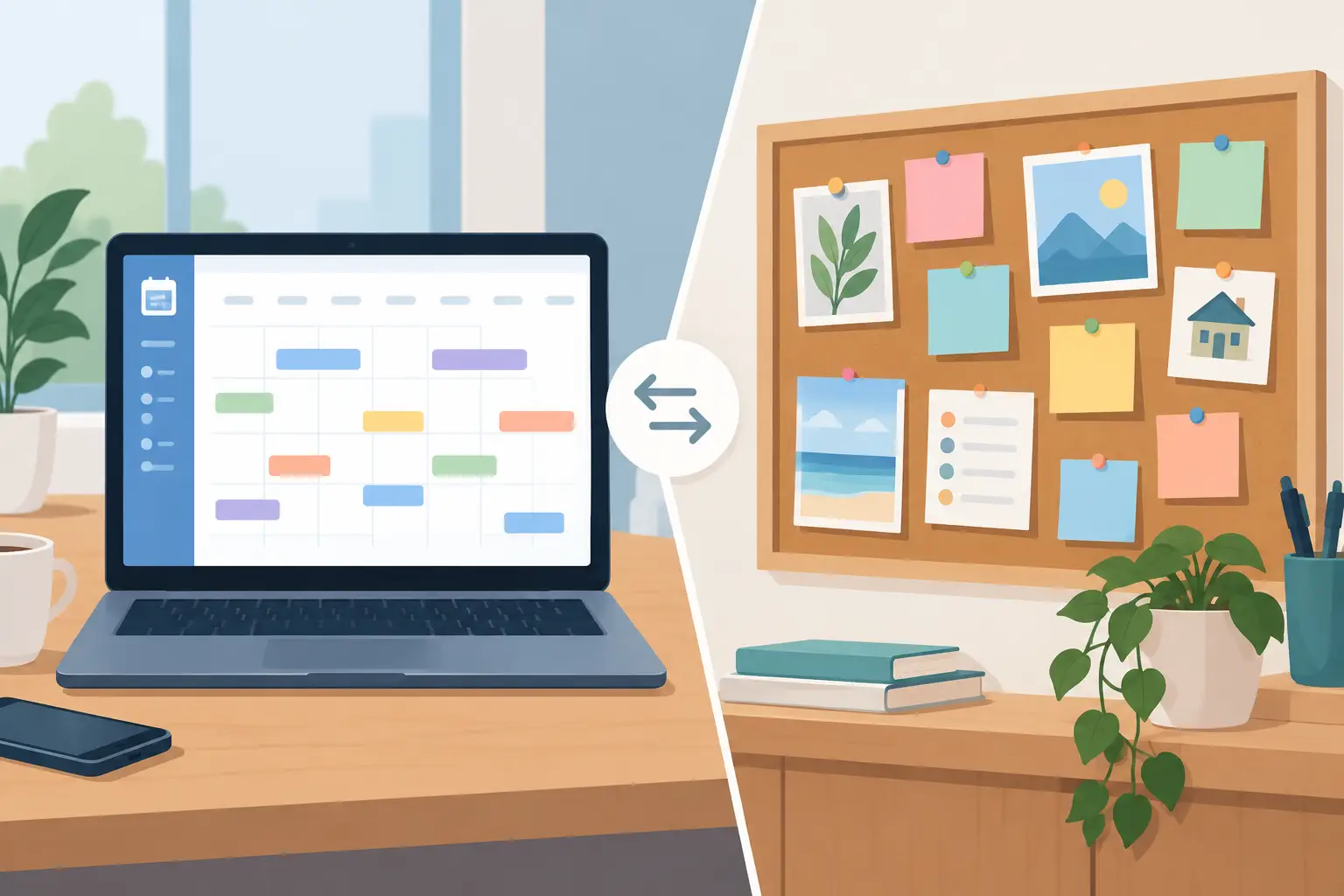
Digital Calendars Versus Visual Boards at Home

The permission slip is due Friday, soccer practice moved to Thursday, and someone needs to remember milk before dinner. Digital calendars versus visual boards is not really a question of which tool is better in general. It is a question of which tool your family will actually see, use, and trust during a busy week.
For many households, a phone calendar handles appointments well but does not solve the everyday communication happening in the kitchen. A visual board keeps the family plan where people naturally gather, while a digital calendar can follow each person wherever they go. The best choice depends on how your household shares information.
Digital Calendars Versus Visual Boards: The Main Difference
A digital calendar lives on a phone, tablet, computer, or smart display. It can send alerts, repeat events automatically, update quickly, and be shared with family members. It works especially well for personal appointments, work commitments, and activities that change while you are away from home.
A visual board is a calendar or message center placed in a shared area, often on the refrigerator. It shows the month, the week, notes, chores, meal ideas, and reminders in one visible spot. No one needs to remember a password, open an app, or accept an invitation to see what is happening.
That visibility is the biggest difference. A digital calendar asks each person to check a device. A visual board puts the plan in front of everyone while they grab breakfast, pack lunches, or look for a snack after school.
When a Digital Calendar Works Best
Digital calendars are helpful when family members spend much of the day in different places. A parent at work can add a dentist appointment from the parking lot. A teenager with a phone can receive an alert before band practice. A caregiver can see a shared event without having to be at the house.
They are also useful for details that need to travel with you. An appointment address, confirmation number, meeting link, or travel reminder fits naturally in a digital event. Automatic notifications can prevent a missed pickup when a day gets hectic.
Digital tools are often strongest for adults who already use their phones to manage work and personal schedules. If both parents regularly check the same shared calendar, it can reduce back-and-forth texts and last-minute surprises.
Still, digital calendars have a common household weakness: they are personal by design. One person may add an event but forget to share it. Another may silence notifications. Younger children may not have a device at all. Even family members who do use a shared calendar may only look at it when an alert appears.
A notification tells someone about one event. It does not always show the full shape of the week.
Why Visual Boards Help Busy Families
A visual board makes family coordination more public in a good way. When the schedule is on the refrigerator, everyone can see that Tuesday is crowded, Thursday has an early pickup, and Saturday is already full. That shared view helps families make better day-to-day decisions before plans overlap.
It also gives children a way to participate. A child can look at the calendar and see a school event, a grandparent visit, or the day library books are due. They do not need access to an app to understand what is coming next. For many kids, seeing the plan written in a familiar place makes routines easier to follow.
The space around the calendar matters, too. A household usually needs more than dates. It needs a place for a grocery reminder, a note that says "take out the trash," a phone message, or a quick dinner plan. A refrigerator message center can hold those small pieces of information that are too easy to lose in a text thread.
A magnetic calendar is especially practical because the refrigerator is already part of daily family traffic. You are likely to see it in the morning, after school, and while making dinner. The calendar does not have to compete with email, social media, work messages, or dozens of other phone alerts.
There is a trade-off. A visual board does not automatically notify anyone who is away from home, and it cannot update itself when a practice time changes. It also works best when someone takes a few minutes to keep it current. But that simple weekly check-in can become a useful family habit rather than another task to avoid.
The Best Answer Is Often Both
Many families do not need to choose one system forever. They need each tool to do the job it handles best.
Use a digital calendar for appointments, work schedules, travel details, and alerts while you are out. Use a visual board for the household plan everyone needs to see. The refrigerator calendar can show the major events, school activities, meal plans, and reminders that affect the whole family. Phones can carry the details and send timely notifications.
For example, a parent might enter an orthodontist appointment on a shared digital calendar with the office address and a reminder. Then they can write "Mia orthodontist, 3:30" on the refrigerator calendar so everyone knows who needs to leave school early and why. Neither system has to carry every detail alone.
This approach also gives the family a backup. If a phone battery dies, a notification is missed, or someone forgets to check the app, the kitchen calendar is still there. If plans change after everyone has left the house, the digital calendar can carry the update.
How to Set Up a System Your Family Will Use
Start by deciding what belongs in the shared view. Keep it simple: school events, practices, appointments that affect rides or meals, visitors, and major deadlines. If every personal detail goes on the board, it can become hard to read. The goal is a clear picture of what affects the household.
Next, choose a few consistent habits. Update the calendar on Sunday evening or Monday morning. Write down school papers and invitations as soon as they come in. Before agreeing to a new activity, glance at the board first. Small routines make the system dependable.
Give each family member an easy way to recognize their events. You might use assigned colors, initials, or simple labels. The method does not need to look perfect. It needs to make sense at a glance when someone is standing at the refrigerator with a backpack in one hand.
Keep a notepad nearby for things that do not belong on the monthly grid. Grocery needs, calls to return, questions for a teacher, and meal ideas are all useful notes, but they can crowd a calendar. A calendar-and-message-center setup gives each item a proper place.
Finally, choose a board that feels like it belongs in your kitchen. When a planning tool matches your home and includes imagery your family enjoys, it is more likely to stay visible and in use. IceboxCalendars combines personalized calendar views, note space, a pen, and helpful kitchen references in one magnetic refrigerator center, which can make that daily habit easier to maintain.
Choose for Visibility, Not Perfection
The right system is the one that prevents the most avoidable confusion in your home. If everyone reliably checks a shared digital calendar, lean into it. If missed messages and forgotten papers are your biggest problem, a visible refrigerator board may make a bigger difference right away.
Most busy families benefit from making the household schedule easy to see before the day begins. Put the next practice, pickup, dinner plan, and reminder where your family naturally looks, then let the rest of the week feel a little less rushed.


Comments